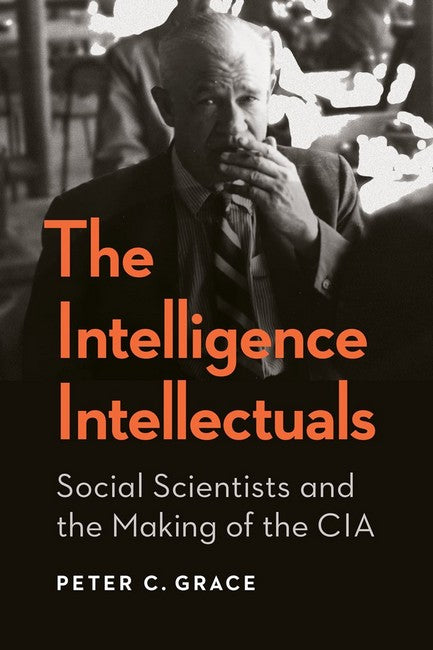
The Intelligence Intellectuals
The Intelligence Intellectuals
SKU:9781647126445
Share
The untold story of how Americas brightest academic minds revolutionized intelligence analysis at the CIA
In the early days of the Cold War, the United States faced a crisis in intelligence analysis. A series of intelligence failures in 1949 and 1950, including the failure to warn about the North Korean invasion of South Korea, made it clear that gut instinct and traditional practices were no longer sufficient for intelligence analysis in the nuclear age. The new director of the Central Intelligence Agency, Walter Bedell Smith, had a mandate to reform it.
Based on new archival research in declassified documents and the participants personal papers, The Intelligence Intellectuals reveals the neglected history of how Americas brightest academic minds were recruited by the CIA to revolutionize intelligence analysis during this critical period. Peter C. Grace describes how the scientifically sound analysis methods that they introduced significantly helped the United States gain an advantage in the Cold War, and these new analysts legitimized the role of the recently created CIA in the national security community. Grace demonstrates how these professors—such as William Langer from Harvard, Sherman Kent from Yale, and Max Millikan from MIT—developed systematic approaches to intelligence analysis that shaped the CIAs methodology for decades to come.
Readers interested in the history of the Cold War and in intelligence, scholars of intelligence studies, Cold War historians, and intelligence practitioners seeking to understand their crafts foundations will all value this insightful history about the place of social science in national security.
The untold story of how Americas brightest academic minds revolutionized intelligence analysis at the CIA
In the early days of the Cold War, the United States faced a crisis in intelligence analysis. A series of intelligence failures in 1949 and 1950, including the failure to warn about the North Korean invasion of South Korea, made it clear that gut instinct and traditional practices were no longer sufficient for intelligence analysis in the nuclear age. The new director of the Central Intelligence Agency, Walter Bedell Smith, had a mandate to reform it.
Based on new archival research in declassified documents and the participants personal papers, The Intelligence Intellectuals reveals the neglected history of how Americas brightest academic minds were recruited by the CIA to revolutionize intelligence analysis during this critical period. Peter C. Grace describes how the scientifically sound analysis methods that they introduced significantly helped the United States gain an advantage in the Cold War, and these new analysts legitimized the role of the recently created CIA in the national security community. Grace demonstrates how these professors—such as William Langer from Harvard, Sherman Kent from Yale, and Max Millikan from MIT—developed systematic approaches to intelligence analysis that shaped the CIAs methodology for decades to come.
Readers interested in the history of the Cold War and in intelligence, scholars of intelligence studies, Cold War historians, and intelligence practitioners seeking to understand their crafts foundations will all value this insightful history about the place of social science in national security.
About the Author
About the Author
<p>Peter C. Grace is a lecturer on politics and international relations at the University of Otago, New Zealand. He is one of the volume editors of New Zealands Foreign Policy under the Jacinda Ardern Government.</p><br>
Couldn't load pickup availability