Evidence-Based Practice in Clinical Hypnosis
Evidence-Based Practice in Clinical Hypnosis
SKU:9781433837654
Share
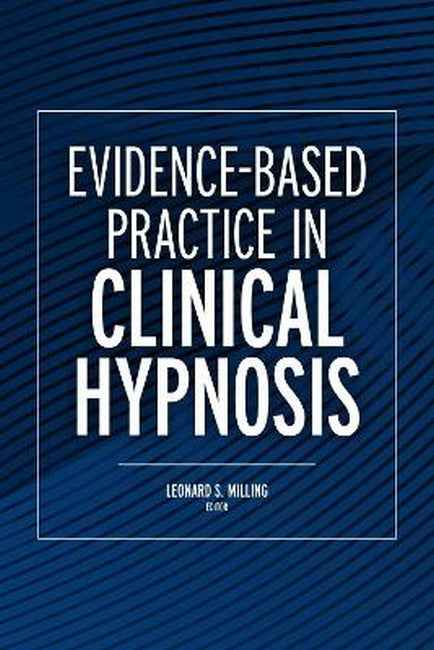
Hypnosis affords clinicians a brief, efficient, and cost-effective methodology to address a wide range of psychological conditions and disorders. This volume demonstrates both how hypnotic techniques can supplement science-based clinical interventions and how clinicians can use hypnosis with the assurance of a strong empirical foundation to guide their practice. While hypnosis has carved a well-earned place in the field of psychological science and clinical practice, views of hypnosis as gimmicky or fantastical are still stubbornly rooted in our collective consciousness, thanks to media-driven, outmoded, and inaccurate notions. This book compiles the scientific evidence for and the clinical practice of hypnosis to treat a range of problems and symptoms. Included are chapters on working with anxiety, depression, acute pain, chronic pain, and other behavioral medicine problems, as well as a chapter on working with children and adolescents. Contributors review the empirical evidence for the effectiveness of hypnosis for the problem under consideration, offer illustrative case materials, and provide examples of specific hypnotic inductions and suggestions.
About the Author
About the Author
Leonard S. Milling, PhD, is a professor of psychology at the University of Hartford. Dr. Milling is a clinical psychologist with specializations in child clinical and pediatric psychology. He teaches undergraduate courses in personality psychology and abnormal psychology, as well as graduate courses in personality psychology and psychopathology. Dr. Milling's research interests are in the area of psychological interventions for physical pain. The current focus of this work involves evaluating the psychological variables that explain how psychological interventions reduce pain and the personality variables that predict who benefits the most from particular interventions.
Couldn't load pickup availability